
Thai Railways


Krung Thep Aphiwat Central Terminal (Bang Sue Grand Station)
As the largest railway hub in Southeast Asia, Krung Thep Aphiwat Central Terminal represents Thailand’s bold leap into the future of regional connectivity. Replacing the century-old terminal as the nation’s primary rail gateway, this massive infrastructure project symbolizes the "Thailand 4.0" initiative to modernize the country’s logistics and transportation backbone. Its sleek, contemporary design stands as a landmark of 21st-century Thai ambition, positioned to serve as a pivotal link for the Trans-ASEAN railway network and high-speed rail lines connecting Thailand to the rest of Asia.
Visitors can tour the expansive terminal floors, which feature cutting-edge passenger management systems, multi-modal transport links, and a distinctive clock tower designed to honor the royal heritage of the Thai rail system. The educational value lies in observing "mega-project management" and urban transit-oriented development (TOD) on a grand scale. For those interested in public policy and urban planning, the station provides a live case study on how a developing nation manages the transition from legacy systems to a high-capacity, electrified rail network designed for environmental sustainability and regional economic integration.
Makkasan Factory
Established in 1910 during the reign of King Rama V, the Makkasan Railway Factory was once the most advanced industrial facility in Southeast Asia. For over a century, it has served as the heart of Thailand’s railway engineering, where locomotives were maintained and passenger carriages were built from scratch. The site is a rare surviving example of early 20th-century European-style industrial architecture in Bangkok, featuring expansive red-brick workshops and cathedral-like steel structures. It remains a testament to the kingdom’s early industrialization and the long-standing craftsmanship of Thai railway engineers.
Be granted a rare "behind-the-scenes" look at heavy industrial maintenance, where massive diesel locomotives and vintage rolling stock are overhauled. The site offers a unique perspective on "industrial heritage preservation" versus urban redevelopment, as the factory sits on a prime piece of green space in central Bangkok. Educationally, the program highlights the evolution of mechanical engineering and the challenges of maintaining a functional industrial site within a rapidly modernizing urban landscape, providing deep insights into technical vocational history and the resilience of 100-year-old infrastructure.
Hua Lamphong Station
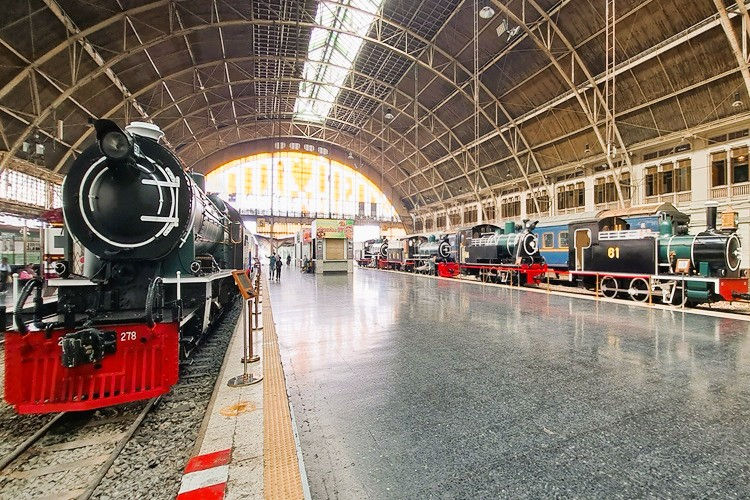
Inaugurated in 1916, Hua Lamphong Station is an architectural masterpiece designed by Italian architects in the Italian Neo-Renaissance style. Its iconic half-dome roof and elegant stained glass windows have made it one of Bangkok’s most recognizable landmarks for over a century. As the historic terminus for all trains entering the capital, it has served as the emotional gateway to the city for generations of travelers, migrants, and tourists. The station is a living monument to the era of King Rama V’s modernization efforts, blending European aesthetic grandeur with the functional needs of a growing tropical kingdom.
Walking through the grand passenger hall, I observed the intricate stucco work and the timeless atmosphere of a station that still hums with local life.The educational value centers on "adaptive reuse" and architectural conservation; as primary rail services shift to the new central terminal, Hua Lamphong is transitioning into a heritage site and public space. For those interested in history and sociology, the station offers a window into the "evolution of Thai social mobility" and the role of public architecture in defining the character of a capital city.
Thai Railway Museum
Tucked away inside the historic Hua Lamphong complex, the Thai Railway Museum preserves the specialized history of the State Railway of Thailand (SRT). The collection documents the royal origins of the rail system, which was personally initiated by King Rama V to safeguard Thai sovereignty and unify the provinces. Through its archives and artifacts, the museum tells the story of how the "Iron Rose" of the railway became the primary driver of Thailand’s domestic trade and social expansion during the late 19th and early 20th centuries.
The museum features a curated collection of early signalling equipment, vintage uniforms, original railway tickets, and detailed models of historic locomotives. Visitors can engage with displays that explain the technical challenges of laying tracks through Thailand’s varied terrain of jungles and mountains. The educational focus is on "logistics history" and nation-building; it illustrates how standardized transportation systems are vital for central administration and economic development. It serves as an intimate companion to the grander station tour, providing the specific technical context that fueled the country's growth.