
Chalong Rawai


Wat Chalong Royal Temple
As the largest and most revered Buddhist temple in Phuket, Wat Chalong (formally Wat Chaithararam) serves as the island's spiritual heart. Historically, it is dedicated to two highly respected monks, Luang Pho Chaem and Luang Pho Chuang, who led the local citizens against the Chinese Coolie Rebellion in 1876, using their knowledge of herbal medicine and spiritual leadership to protect the community. Today, the temple’s grand pagoda, which reportedly houses a bone fragment of Lord Buddha, remains a site of deep religious significance where locals and visitors alike come to pray for health and good fortune amidst stunning Thai Rattanakosin-style architecture.
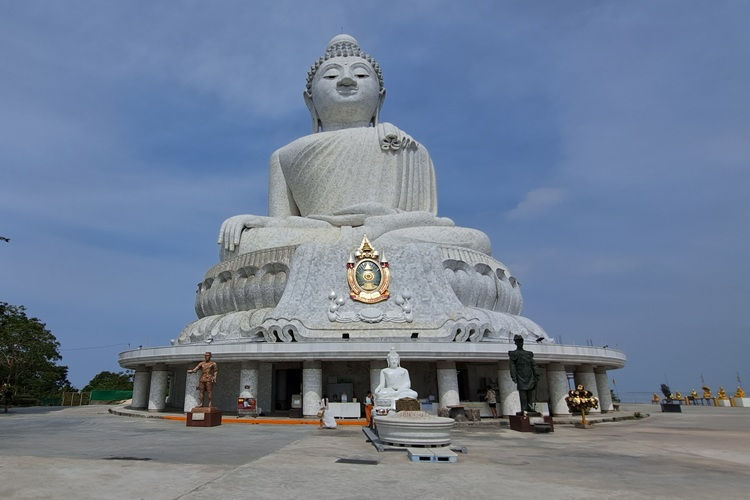
The Big Buddha
Perched atop Nakkerd Hill, the 45-meter-tall Big Buddha (Phra Phutta Ming Mongkol Eknakiri) is a relatively modern landmark that has quickly become a primary symbol of Phuket’s religious devotion. Constructed entirely from white Burmese marble that glitters in the sun, the statue was funded almost exclusively by public donations, representing the collective merit-making of the Thai people. Beyond its spiritual role as a site for meditation and Buddhist teachings, it holds immense economic importance as a premier viewpoint, drawing thousands of visitors daily who contribute to the local tourism economy while seeking panoramic views of the island.
Cashew Nut Factory
The production of cashew nuts is one of Phuket's most vital local industries, rooted in the island’s fertile soil and tropical climate. A visit to a local factory, such as Sri Bhurapa Orchid, reveals the labor-intensive process of extracting the nut from the "cashew apple"—a task that historically required great manual skill to avoid the caustic oils in the shell. Economically, these factories are a cornerstone of Phuket’s "OTOP" (One Tambon One Product) initiative, turning a raw agricultural product into a high-value export and souvenir that supports hundreds of local families.
Promthep Cape
Known locally as "Laem Phromthep," this dramatic headland at the southernmost tip of Phuket has served as a vital maritime landmark for sailors for centuries. Historically, its lighthouse (the Kanchanaphisek Lighthouse) was built to commemorate the Golden Jubilee of King Rama IX and remains a functional navigational aid, visible for miles at sea. Culturally, the cape is the island's most iconic sunset viewing spot, symbolizing the natural beauty of the Andaman Coast and serving as a communal gathering place where the "golden hour" creates a shared experience for locals and travelers.
Batik Leaning Centre
Batik art holds significant cultural weight in Phuket, reflecting the island's Malay and Indonesian influences through intricate wax-resist dyeing techniques. Chai Batik, a prominent local studio, helps preserve this traditional craft by blending classic floral motifs with modern Phuket-inspired designs, such as sea life and tropical landscapes. Economically and culturally, these studios keep the artisanal heritage of the region alive, providing an alternative to mass-produced textiles and allowing visitors to engage directly with the island’s creative identity through workshops and locally made apparel.
Dolphin Bay Show
Located in the Chalong area, Dolphin Bay is a modern entertainment venue that contributes to the island's diverse range of family-oriented tourism attractions. While it is a newer addition to Phuket’s landscape compared to the ancient temples, it represents the shift in the island’s economic strategy toward large-scale, specialized animal exhibits and international-standard performances. The facility plays a role in the local economy by creating jobs and drawing tourism traffic to the southern interior of the island, though it also serves as a focal point for modern discussions regarding marine conservation and educational entertainment in Thailand.
Rawai Sea Gypsy Seafood Market
This vibrant market at Rawai Beach is the cultural and economic hub for the Chao Ley (Sea Gypsies), the island’s original nomadic seafaring inhabitants. For generations, the Sea Gypsies have relied on their ancestral knowledge of the Andaman Sea to provide for their community; today, the market allows them to sell their daily catch—ranging from giant lobsters to exotic shellfish—directly to consumers. It is a unique economic ecosystem where you buy fresh seafood on one side of the road and take it to a restaurant on the other to be cooked, ensuring that the financial benefits of the trade stay directly within this indigenous community.